
Dominick and Thomas Across a Shared Life
I Know This Much Is TrueThis thread traces how Dominick’s identical-twin bond with Thomas shifts from childhood closeness and rivalry into caretaking, guilt, grief, and a new understanding of their separateness.
increasing Bearing strength in each event
 decreasing
Bearing strength in each eventdecreasingTwo Boys in One Frame

Two Boys in One Frame
A Shared Beginning
Dominick and Thomas grow up as identical twins whose closeness is both a source of recognition and a constraint. Their mother’s stories, photographs, and routines repeatedly present them as a pair, while each boy is already becoming different: Thomas is watchful and tender, Dominick more impulsive and eager to test limits.
Difference and Rivalry
The resemblance draws attention from other people, but the boys experience their bond privately as a daily contest over space, praise, and independence. Dominick sometimes exploits Thomas’s trust or makes him the target of teasing, then feels the pull of loyalty that makes the cruelty hard to dismiss.
The early relationship establishes the novel’s central emotional contradiction: Dominick wants to be free of the twin who seems to define him, yet fears what separation would mean. Thomas’s vulnerability invites care, but also stirs Dominick’s envy and resentment.
The Roommate Promise
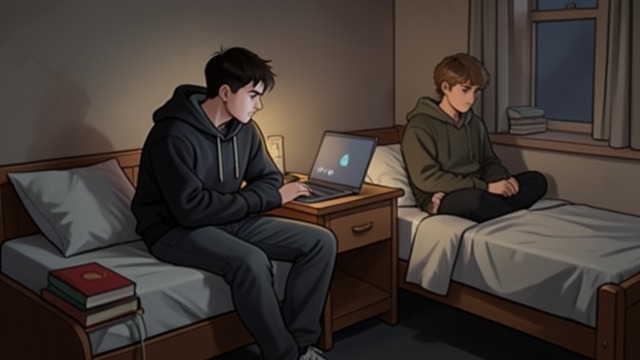
The Roommate Promise
A Deferred Escape
When college approaches, Dominick sees separate rooms as a chance to become his own person. Their mother asks him to room with Thomas because she believes the familiar arrangement will steady her more anxious son. Dominick gives in, not because he wants the responsibility, but because he cannot bear to refuse her.
Dependence and Resentment
At the University of Connecticut, Thomas struggles to study, sleep, and adapt. Dominick covers for him, types a paper, and watches his difficulties accumulate, while also resenting the way Thomas seems to need his attention and resists his friendships with others.
The shared room becomes a miniature version of their larger bond: love expressed through practical care, but care mixed with anger and a longing to escape. Dominick’s desire for independence does not erase his fear that Thomas will be left alone.
A Brother Left Behind

A Brother Left Behind
Choosing the Crew
Dominick finds a temporary freedom in his renewed friendship with Leo and his growing closeness to Ralph Drinkwater. Their jokes, marijuana, and shared work make him feel like one of the guys. Thomas, more cautious and isolated, becomes the odd man out, and Dominick accepts the relief of not having to attend to him every moment.
The Cost of Silence
When Dell humiliates Thomas and Ralph at the reservoir, Dominick is too frightened to challenge Dell. Thomas quits, and Dominick leaves him behind emotionally as well as physically, unable to face his brother’s distress or his own failure to intervene. He then helps Leo mislead the police and implicate Ralph.
At Rosemark’s Pond, Dominick tries to wash away his guilt but discovers that a swim cannot undo what he has done. His memory of Thomas’s earlier kindness makes the betrayal sharper: he recognizes that the illness was beginning, yet he had spent the summer wishing to be free of his brother.
The Brother at the Gate
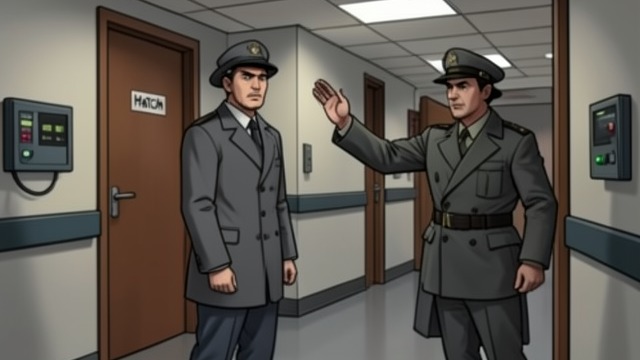
The Brother at the Gate
Trying to Keep Him Safe
After Thomas cuts off his hand, Dominick refuses reattachment because Thomas insists the act is his choice. When officials transfer him to Hatch rather than Settle, Dominick argues with police, tries to reverse the decision, and follows his brother into the institution despite fear and anger.
Care in a Locked Ward
Dominick sees Thomas restrained, frightened, and overwhelmed by the rules and surveillance. He fights to have him returned to a less restrictive setting, but his own outburst leads to a guard injuring him. Even when he feels powerless, he keeps visiting, organizing advocates, and asking staff to protect Thomas.
The old caretaker role becomes both an expression of love and a trap. Dominick experiences himself as the only person who can run interference for his twin, yet begins to understand that he cannot control Thomas’s illness or guarantee his safety.
The Twin Left Behind
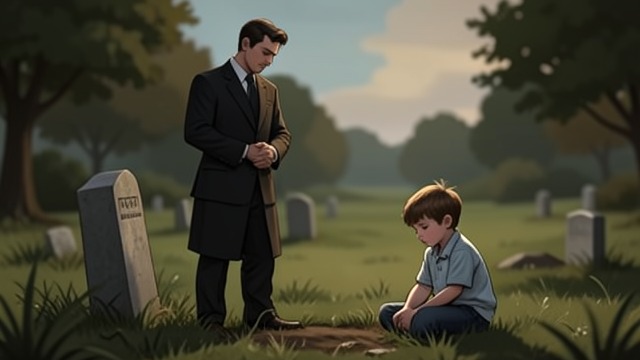
The Twin Left Behind
A Bond That Outlasts Separation
After Thomas leaves Hatch for Hope House, Dominick believes that ordinary life may again be possible for his brother. Thomas’s later disappearance and drowning end that hope. Dominick is left with the painful knowledge that his love did not make him capable of preventing the loss.
Learning to Carry the Absence
At Thomas’s funeral, memories of rivalry, protection, and guilt return together. Dominick recalls times he humiliated his brother, failed to defend him, or wanted to escape. He also remembers Thomas’s tenderness, including the childhood affection and concern that the illness could not entirely erase.
Dominick’s mourning does not resolve into a clean separation from his twin. Instead, he begins to recognize that loving Thomas and wishing to be free of his demands were both real. The relationship persists as an absence he must carry without pretending he could have controlled its ending.
childhood, before Thomas’s illness becomes unmistakable
summer 1968, before their first year at the University of Connecticut
summer 1969, during the Three Rivers Public Works job
October 1990, during Thomas’s transfer to Hatch
after Thomas’s release from Hatch and death at the Falls
